


Ketamine Medication
What is Ketamine in Australia?
Ketamine, known scientifically as ketamine hydrochloride, is a powerful dissociative general anaesthetic commonly utilized in Sydney, Australia. This intriguing drug is favored by doctors and veterinarians alike for its remarkable ability to provide profound pain relief and induce amnesia. Unlike traditional general anaesthetics, ketamine offers a distinct advantage, particularly for vulnerable populations such as the elderly and children, as it does not depress respiratory or cardiac functions. If you’re looking to buy Ketamine HCL in Melbourne, Victoria, Australia, you’re in the right place! This medication has some impressive anesthetic properties that can be really beneficial.
Often referred to by its street names—such as ‘Vitamin K’ (a curious misnomer that should not be confused with the actual vitamin found in greens), ‘Special K’, ‘Super K’, ‘K’, ‘Green’, ‘Donkey Dust’, ‘Ket’, or ‘Wonk’—ketamine delivers an immersive experience characterized by a profound sensation of detachment from both one’s body and the surrounding environment. This sensation is triggered by the drug’s ability to mute the flow of signals to the conscious mind from various brain regions, effectively dulling the senses of sight, sound, taste, touch, and smell.
The short-term effects of ketamine HCL can be both captivating and disorienting, including euphoria, vivid hallucination, amnesia, slurred speech, nausea, and dissociation from reality.
How Ketamine Works in Australia
In the sunny city of Brisbane, Queensland, Australia, ketamine HCL has emerged as a novel medication for treating various pain and mood disorders. While the intricate mechanisms underlying its effects remain somewhat elusive, research suggests that ketamine plays a vital role in disrupting the sensitization of neurons within the brain and spinal cord to painful stimuli. Thus, it serves as both an anesthetic and an analgesic, effectively mitigating pain. If you’re thinking on how to order Ketamine powder in Melbourne, Australia, it’s important to understand its implications, especially since it has been withdrawn as a primary anesthetic for human use
Delving deeper, ketamine interacts with a complex network of protein pathways in the brain that are crucial for memory, plasticity, and learning. When it binds to specific receptors, ketamine engages in a fascinating dance with the opioid, AMPA, GABA, cholinergic, and dopaminergic systems. As an antagonist, it influences HCN1, potassium, calcium, and sodium channels within neurons, effectively dulling pain responses and preventing the escalation of chronic pain.
One of the most significant aspects of ketamine’s action lies in its antagonism of the N-methyl D-aspartate (NMDA) receptor. Interestingly, the analgesic effects of ketamine do not stem from direct interaction with this receptor; rather, they initiate a cascade of downstream molecular events. These multifaceted mechanisms may also play a role in “resetting” the hypersensitized pain receptors found in conditions like Chronic Regional Pain Syndrome (CRPS). Furthermore, given the frequent coexistence of chronic pain and depression, ketamine’s potent antidepressant properties may not only lighten mood but also positively influence pain perception.
How is Ketamine Administered?
In Perth, Western Australia, ketamine can be administered through a variety of methods—including intravenous, intramuscular, oral, or intranasal routes. The choice of administration depends on the underlying condition being treated as well as the preferences of the healthcare provider. Among these options, ketamine infusions have become an increasingly popular method for addressing both depression and chronic pain.
Historically employed primarily as an anesthetic, ketamine powder has gained renewed attention in recent years as a promising treatment for depression, chronic pain, and other challenging conditions. While there are inherent risks associated with its use, ketamine therapy can be remarkably safe and effective when guided by a knowledgeable healthcare provider. As ongoing research continues to unfold, we anticipate discovering even more of ketamine’s potential benefits and applications.
Ketamine’s Effects on the Brain
Unlike most current antidepressants that target the monoamine neurotransmitters such as serotonin, norepinephrine, and dopamine—key players in our emotional and memory processes—ketamine powder operates on a whole different spectrum, reshaping the conventional view of depression.
A primary player in ketamine’s antidepressant effects is the NMDA receptor, which interacts with the amino acid glutamate in Melbourne, Victoria, Australia. Traditional antidepressants typically increase the availability of neurotransmitters like serotonin and norepinephrine; however, ketamine’s unique approach blocks the NMDA receptor, allowing synapses to flourish and facilitating the growth of new connections within the brain. This remarkable ability enables the brain to initiate its own healing process, reminiscent of a city rejuvenated by fresh connections and restored vitality.
Patients who respond favorably to ketamine therapy often experience nearly instantaneous relief from the burdens of depression and chronic pain. Because ketamine swiftly permeates biological membranes and is metabolized rapidly, the onset of its effects is both immediate and transformative, offering a beacon of hope for those seeking solace from their suffering.
How Does Ketamine Work for Severe Depression?
A single dose of ketamine powder has shown significant promise in alleviating symptoms in individuals with major depressive disorder in Sydney, Australia. Patients often experience a striking reduction in debilitating depressive feelings, including overwhelming thoughts of self-harm and suicide. If you are considering Ketamine HCL for sale in Adelaide, South Australia, make sure to prioritize safety and well-being in your decision. Remarkably, the effects of ketamine can manifest almost immediately, with many reporting noticeable improvement that can last up to a week. This rapid response suggests that ketamine may actively contribute to the reshaping of neural pathways in the brain, a phenomenon known as neuroplasticity.
Numerous studies have illuminated this transformative potential. In the days following ketamine infusion, many participants have noted a stark disappearance of depressive symptoms, highlighting the neuropsychiatric advantages of subanesthetic doses. By helping to stabilize moods and significantly diminishing suicidal ideation, ketamine emerges as a beacon of hope for those battling the depths of despair, providing a vital tool in the struggle against self-harm and suicidal tendencies.
Medicinal Uses of Ketamine in Australia
Ketamine emerged from a quest for a safer anesthetic to succeed the powerful dissociative agent phencyclidine (PCP) in Australia. Upon its development, the drug showcased remarkable anesthetic properties, which retained a significant advantage: it rarely caused a decline in heart rate or respiratory function. This early observation ignited considerable optimism about ketamine’s potential in medical settings. However, patients receiving ketamine liquid during anesthesia frequently reported bewildering experiences, including:
– Profound out-of-body sensations
– Spooky near-death encounters
– Vivid hallucinations
– Confounding delusions
– Severe confusion
– Delirium, marked by chaos of thought intermingled with psychosis.
These alarming side effects prompted a re-evaluation of ketamine’s role, resulting in its withdrawal as a primary anesthetic for human use. Yet, the drug has carved out specific niches in the medicinal realm, outlined below.
Anesthesia: Ketamine still finds its place as a specialized anesthetic. It remains a steadfast choice in veterinary medicine and is often employed in pediatric cases due to its safety profile regarding heart and breathing rates. Additionally, it proves invaluable in field situations, serving as a crucial anesthetic for injured soldiers.
Pain Management: In both veterinary and human medicine, ketamine plays an important role in pain relief. For humans, it’s utilized at low dosages to tackle particularly challenging pain conditions, such as neuropathic pain, which arises from nerve injuries.
Seizure Control: Ketamine has shown effectiveness in stabilizing seizures for certain individuals, offering a glimmer of hope for those struggling with uncontrollable symptoms.
Ketamine Misuse:
The misuse of ketamine began to rise in the 1990s, effectively establishing itself as a popular “rave” or club drug, often mixed with ecstasy. Typically encountered in a fine powder form, ketamine is mainly abused through snorting or inhaling, with injections being less common and oral consumption rare.
When snorted, the effects kick in swiftly, typically within 5 to 15 minutes. While its hallucinogenic properties are often fleeting, lasting about an hour, cognitive impairments such as confusion and memory loss can linger, sometimes persisting for an entire day.
Individuals gravitate towards ketamine for its psychoactive effects, which encompass euphoric feelings, profound sedation, and notable shifts in perception and cognition, alongside vivid hallucinations and dissociative experiences. Users may feel a newfound social ease and heightened empathy towards others.
At lower doses, ketamine induces a distortion of time and space, coupled with gentle hallucinations, transforming the user’s environment into a blissful, melting landscape. As the dosage escalates, a deeper detachment from reality occurs, often described as entering the “K-hole,” where the consciousness separates from the physical world, eliciting a tumult of sensations that attract specific users.
The repercussions of ketamine misuse can include:
– Hypnotic-like states, where sedation and hallucinations dominate at lower dosages, while higher dosages push one into profound dissociation.
– Alleviation of pain.
– Disorientation and confusion, causing a detachment from reality.
– Loss of coordination, muscle rigidity, and states approaching unconsciousness.
– Intense sweating.
– Disrupted sleep patterns, interspersing insomnia with lethargy.
Signs of Ketamine Misuse:
In Melbourne, Australia, a range of behavioral signs may indicate ketamine misuse, often overlapping with symptoms related to other substances. It’s pivotal to observe clusters of behaviors rather than single symptoms. You can still purchase Ketamine liquid from us in the beautiful city of Perth, Australia at low price. For instance, a person appearing unusually relaxed might not warrant concern unless their demeanor starkly contrasts their typical behavior. However, certain signs to watch for may include:
– Enlarged pupils.
– An uncharacteristically laid-back or lethargic demeanor.
– Sluggishness in movements and thoughts.
– Challenges in maintaining focus on a single thought.
– Experiencing auditory or visual hallucinations.
– Reporting feelings of unreality or detachment from one’s environment.
– An unnerving sensation of floating outside one’s body.
– Alternating extremes of insomnia and fatigue.
– Periods marked by profound confusion.
– Instances of significant memory blackouts.
This vivid exploration of ketamine’s medical duality sheds light on its complex nature, illustrating both its therapeutic potential and the hazards associated with misuse.
Showing all 2 results
-
 Ketamine Medication
Ketamine powder
$320.00 $1,900.00Price range: $320.00 through $1,900.00Clear3 Grams6 Grams10 Grams20 Grams -
 Ketamine Medication
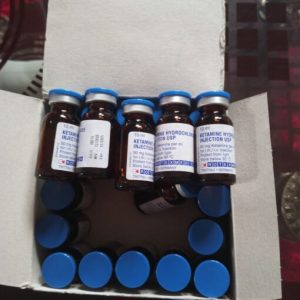
Liquid Ketamine
$340.00 $1,750.00Price range: $340.00 through $1,750.00Clear1 Vial 500MG (10ml)2 Vials 500MG (10ml)5 Vials 20MG (ml)10 Vials 500MG (10ml)